Before you ask anyone for a price, you need to decide how the project will be delivered. That choice decides who designs the building, who carries the risk when something is missed, and how much control you keep over the details.
For small commercial projects, the two common options are a traditional tender and design and construct. Neither is better in every case. Each suits a different kind of owner and project.
How a traditional tender works
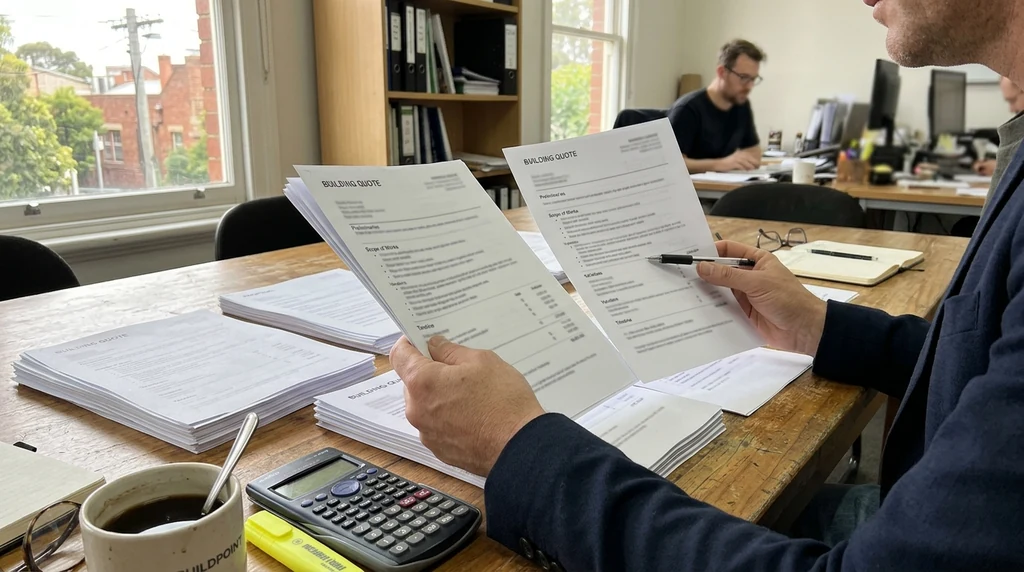
In a traditional model, you engage a designer to prepare the full set of drawings and specifications. Once the documents are complete and the permits are in hand, you invite several builders to price exactly the same scope. You pick a builder, usually on a construct-only contract such as one based on AS 4000, and the builder builds what is drawn.
The design is yours. If the drawings miss something, the cost of fixing it generally falls on you as a variation.
Because the documents need to be complete before tendering, this model depends on good documentation. Many owners bring in construction project management support to run the tender, compare the bids and administer the contract once work starts.
How design and construct works
In design and construct, one party is responsible for both design and construction under a single contract, often based on AS 4902. You set out your requirements in a brief, and the contractor develops the design and builds it.
A common variation is novation. You engage a designer to take the project to concept or developed design, then the designer’s contract is transferred to the builder, who completes the documentation and takes responsibility for it.
Cost certainty
A traditional tender gives you competitive pricing on a fixed scope. If the documents are complete, the lump sum price should hold. If they are not, variations erode that certainty quickly.
Design and construct can give you a fixed price earlier, because the contractor takes on design risk. The trade-off is that you are pricing a brief, not a finished design, so the quality of the brief decides how much certainty you really have. There is also less price competition, because builders are not comparing identical documents.
Speed
Design and construct is usually faster to get started, because design and construction can overlap. Early works can begin while later parts of the design are still being finished.
A traditional tender runs in sequence: design, then permits, then tender, then construction. It takes longer up front, but if the documents are thorough, the construction phase is often smoother because fewer questions arise on site.
Risk
In a traditional tender, design risk sits with you. Gaps, clashes and errors in the drawings become your variations. In design and construct, the contractor carries most of the design risk, which is a large part of the appeal.
That transfer is not free. Contractors price risk, and a design and construct contract can include contingency you never see itemised. Read the brief and the contract carefully, because anything you did not ask for clearly may not be included.
Whichever way the risk sits, the builder you choose still matters. A capable builder on a well-written contract will usually deliver a better result than a poor builder on either model, so the checks in how to choose a commercial builder for your business apply to both routes.
Control
Owners who care about specific finishes, layouts or brand details often prefer the traditional route, because the design is fully settled before a builder is engaged. In design and construct, the contractor makes many detailed decisions, and they will tend to choose what is easier or cheaper to build within the brief.
You can protect your position with a detailed brief, approval points during design and a clear specification for the items that matter most.
Which suits a small commercial owner?
A traditional tender tends to suit owners who:
- Have time to complete the design before construction.
- Want to control layout, finishes and branding closely.
- Want several builders competing on the same documents.
Design and construct tends to suit owners who:
- Need to start quickly, often to meet a lease or opening date.
- Prefer one point of responsibility for design and construction.
- Can write a clear brief and are comfortable leaving detail decisions to the contractor.
Many small projects land somewhere in between: a design team takes the drawings far enough to lock in the important decisions, then the work is tendered to registered builders, with one point of contact looking after the process for the owner. That is how we run our commercial projects in Melbourne.
A middle path: early contractor involvement
Some owners bring a builder in early, before the design is finished, on a paid basis to advise on buildability, cost and program. Once the design is developed, the builder is invited to price it, often alongside other builders for comparison.
Early contractor involvement can help on projects with tricky existing conditions, tight sites or staged works, where a builder’s input early on saves redesign later. It does need a clear agreement about fees, who owns the advice and whether the builder is guaranteed the construction contract.
Questions to ask before you decide
- How firm is the opening or lease date, and what happens if it slips?
- How much of the design do you want to decide yourself?
- Do you have time to complete the documents before pricing?
- Who will check the design and the builder’s work on your behalf?
- Would competitive tension on price make a real difference to your budget?
Your answers usually point clearly to one model or the other.
Whichever route you choose, documents decide the outcome
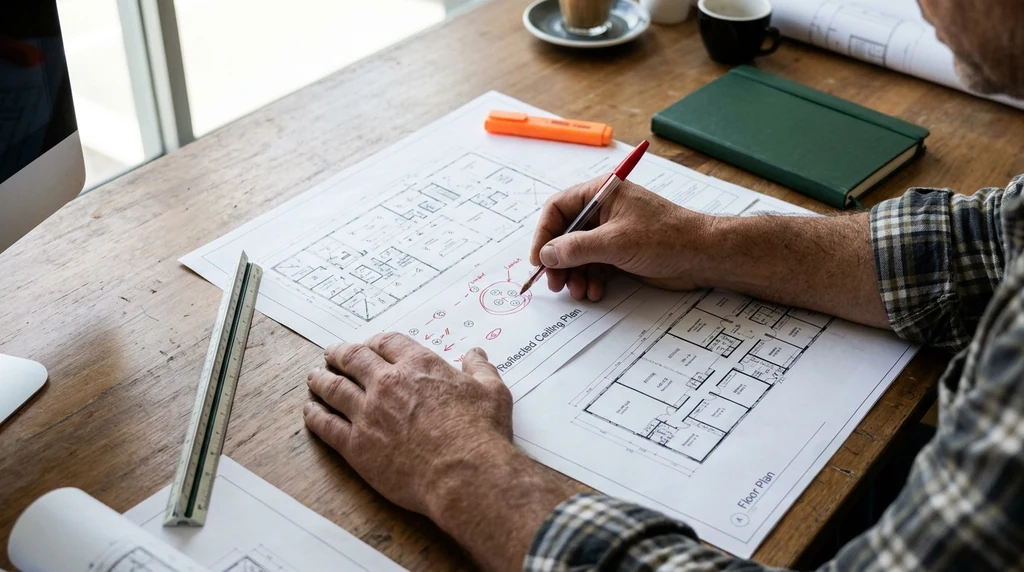
Both models depend on good information. In a traditional tender, the drawings are what every builder prices. In design and construct, the brief and early drawings set the boundaries of what the contractor must deliver.
That is why it pays to understand what drawings a builder needs before quoting a commercial job, whichever delivery model you choose. Complete drawings make a traditional tender work, and a clear brief backed by good early drawings keeps a design and construct contractor accountable.
The short version
Traditional tender gives you control and competitive pricing, but you carry the design risk and it takes longer to start. Design and construct is faster and moves design risk to the contractor, but you give up some control and some price competition. The right answer depends on your timeframe, your budget and how much detail you want to decide yourself.
If you are weighing up the options, call Buildpoint on 1300 787 552 and we can talk through which model suits your project.