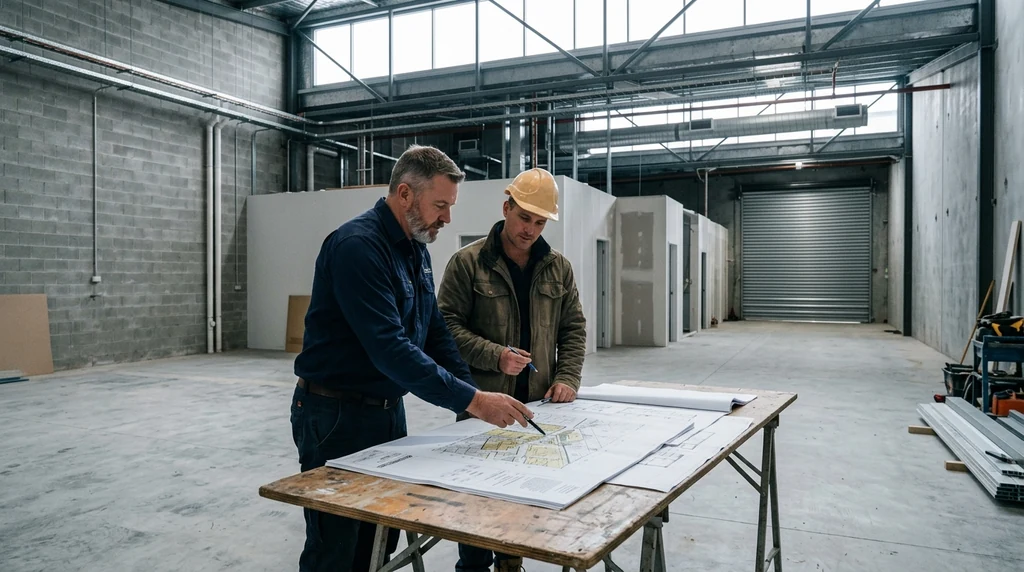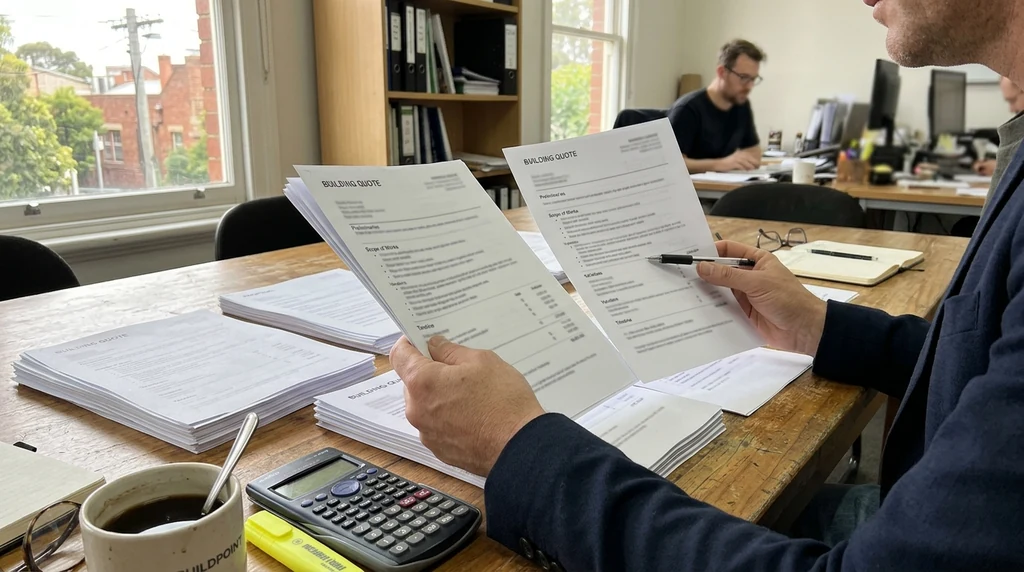
You send the same job to three builders and get three quotes that are tens of thousands of dollars apart. It is tempting to assume the cheapest builder is efficient and the dearest is greedy. Usually, neither is true. They are pricing different things.
A low price can hide exclusions and allowances that resurface as variations. A high price can include work the cheaper builders left out, or a more realistic program. Until you know which is which, the headline numbers tell you very little.
Understanding why quotes vary is the first step to comparing them properly. Here are the most common reasons, and how to deal with each one.
Reason 1: the scope is not the same
The biggest cause of variation is incomplete documentation. When the drawings leave questions open, each builder answers them differently. One allows for a new switchboard, another assumes the existing one is fine. One prices a full ceiling replacement, another patches.
Older buildings make this worse. Where nobody has checked the existing ceilings, services or structure, each builder makes their own judgement about what they will find. A careful builder prices for problems. An optimistic one does not, and expects to recover the difference later through variations.
The fix is to give every builder the same complete set of drawings, schedules and a specification. If a builder has to guess, the documents are not finished. It is how we document every project, and it is the basis of our commercial design and tender process in Melbourne, because comparable quotes start with identical documents.
Reason 2: provisional sums and allowances
A provisional sum is the builder’s estimate for work, usually supply and installation, that the documents do not define well enough to price. Prime cost (PC) items are allowances for supplying things you have not selected yet, such as tapware or flooring. Both are adjusted to the actual cost later.
A quote with large or numerous provisional sums can look cheap while carrying a lot of uncertainty. Total them up for each quote and compare them side by side. Ask whether the amounts are realistic, and whether the builder’s margin applies when they are adjusted.
Reason 3: exclusions
Every quote has a list of exclusions. Read it closely. Common ones include:
- Permit and surveyor fees.
- Services authority charges and connection fees.
- After-hours work.
- Asbestos removal or hazardous materials.
- Rock excavation or unexpected ground conditions.
- Signage, furniture, loose equipment and IT.
An item excluded from one quote and included in another can account for much of the difference.
Reason 4: preliminaries and margin
Preliminaries cover the cost of running the job: supervision, site setup, insurance, temporary fencing and hoarding, waste removal, cleaning and the like. Some builders show them as a line item, others spread them through the price. Margin is the builder’s overhead and profit.
Neither is a bad thing. A builder who allows properly for supervision is more likely to finish on time. But you need to know where they sit before you can compare.
Reason 5: program and staging
A builder pricing a twelve-week program will price differently from one pricing eight weeks. Staging work so your business can keep trading, or working after hours, adds cost. Make sure every builder is pricing the same program and the same working hours.
Reason 6: the builder’s risk view
Builders price risk. An older building, a tight site, a complicated landlord or an unclear contract all push prices up, and different builders weigh those risks differently. A builder who has done similar work may price a known risk lower than one who has not.
Reason 7: GST and contract terms
Check whether each quote includes or excludes GST, how long it is valid, and what contract it assumes. Payment terms, retention and liquidated damages all affect what a builder needs to charge. Once you have narrowed it down to one builder, our checklist on what to check before signing a builder quote or scope of works covers the final review.
Warning signs in a quote
- A single lump sum with no breakdown.
- Provisional sums for items that are clearly drawn and could have been priced.
- A very short validity period that pushes you to sign quickly.
- Exclusions that cover work you obviously need, such as demolition or making good.
- No mention of the program, working hours or contract.
- A price far below the others with no clear explanation.
None of these automatically rules a builder out, but each one deserves a direct question before you go any further.
Ask the same questions of every builder
Once the quotes are in, send each builder the same short list of clarification questions. Ask them to confirm what is included for the items that differ most between quotes, to price any exclusions you need, and to confirm their program and site supervision. Put the answers in writing and add them to your comparison table.
This step often closes much of the gap between the highest and lowest prices, and it shows you which builders respond clearly and quickly. That is a fair preview of how they will communicate once the job starts.
If the comparison still does not add up, or the quotes are too different to line up, get a second opinion before you sign. Buildpoint offers independent building advice on scope, quotes and contract risk, alongside your lawyer, and a fresh set of eyes often spots the gap quickly.
How to compare quotes fairly
- Send every builder the same documents and ask them to price in the same format.
- Ask for an itemised breakdown rather than a lump sum.
- List every exclusion, provisional sum and allowance in a table.
- Price the exclusions yourself, or ask each builder to price them, so the totals compare like with like.
- Check the program, working hours and staging assumptions.
- Confirm GST treatment and the contract each quote is based on.
- Then compare the adjusted totals, not the headline numbers.
Keep the comparison table once you have chosen. It becomes a useful record if questions about scope come up during construction.
Price is only part of the decision. A slightly dearer builder with the right experience, registration and track record is often the cheaper choice by the end of the job. Check registration, insurance and references alongside the numbers.
Do not forget the costs outside the building contract
A quote is the cost of construction, not the cost of the project. You may also face design and engineering fees, permit costs, planning or change of use requirements, authority charges and fitout items outside the builder’s scope. If your use is changing, these change of use checks before you lease cover costs that often surface late.
Getting quotes you can trust
The best way to get comparable quotes is to start with complete documents and a clear scope. Buildpoint prepares the drawings and permit documentation, then tenders it to registered builders who price that same scope, so the quotes you receive describe the same job.
The time spent getting the documents right before pricing is almost always recovered during construction, in fewer variations, fewer disputes and a final cost much closer to the price you signed. If you would like help getting there, phone Buildpoint on 1300 787 552.